
Retaining Wall Design & Installation
Custom retaining walls that combine structural integrity with aesthetic appeal to protect your property and enhance your landscape.
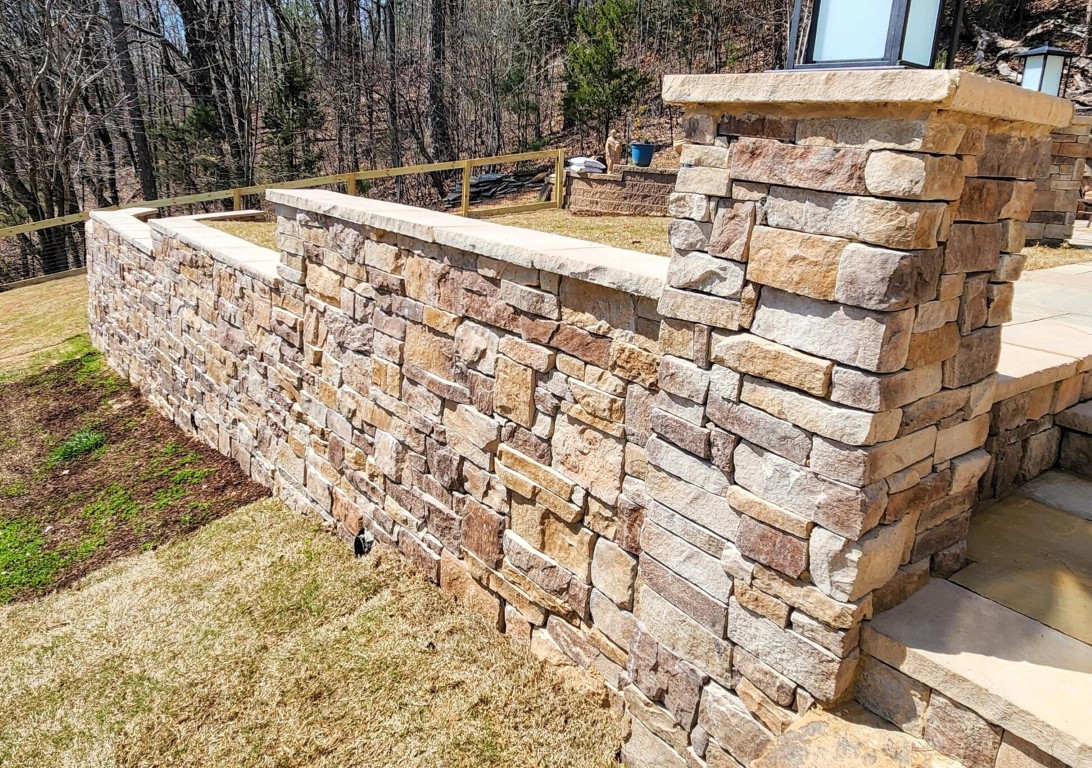
Retaining walls do heavy lifting on your property. They hold back soil on sloped terrain, prevent erosion during heavy rains, create level spaces for patios and gardens, and protect foundations from soil pressure. When these walls fail, the consequences range from minor landscape damage to catastrophic property destruction. Building a retaining wall that lasts requires understanding soil mechanics, drainage requirements, and proper construction techniques. This is not a weekend DIY project.
We design and build retaining walls that solve real problems while looking great. Our approach starts with evaluating your property conditions including soil type, drainage patterns, slope angle, and intended use of the retained area. We then design a wall system with appropriate materials, proper reinforcement, and effective drainage. Every retaining wall we build meets structural requirements and local building codes. The result is a wall that performs its job for decades without leaning, cracking, or failing.
Whether you need a small garden wall or a large structural barrier, we bring engineering knowledge and skilled craftsmanship to your project. Our team has built hundreds of retaining walls throughout Cape Coral and understands the unique challenges of Florida soil and weather. When you choose our masonry services, you get walls designed to last and built to protect your investment.
Why Retaining Walls Fail
Most retaining wall failures happen because of mistakes made during design or construction. Understanding these common causes helps you recognize quality work and avoid contractors who cut corners. Here are the issues we see most often when repairing or replacing failed walls.
Poor Drainage Design
Water is the biggest enemy of retaining walls. When water accumulates behind a wall, it creates hydrostatic pressure that pushes the structure forward. Even well-built walls cannot resist this pressure indefinitely. Proper retaining walls include drainage systems that channel water away before pressure builds. We install drainage pipes, gravel backfill, and weep holes that let water escape. Skipping these drainage features saves money upfront but guarantees failure within a few years.
Inadequate Foundation
Retaining walls need solid foundations that extend below frost lines and sit on stable soil. Many failed walls were built directly on loose topsoil or inadequate base material. The wall settles unevenly, creating cracks and lean. We excavate to proper depth, compact base materials thoroughly, and create level foundations that distribute weight evenly. This extra work during installation prevents costly failures later. Our experience with brick repair and restoration has shown us how foundation issues affect all types of masonry structures.
Insufficient Reinforcement
Tall retaining walls need internal reinforcement to resist soil pressure and prevent overturning. This might include steel reinforcing bars, geogrid materials, or proper tie-back systems. Walls built without adequate reinforcement look fine initially but gradually lean forward as soil pressure works against them. We calculate required reinforcement based on wall height, soil conditions, and load requirements. Our walls include all necessary structural elements, not just the minimum to save costs.
Wrong Material Selection
Different wall materials work better in specific situations. Concrete block walls offer strength and affordability for taller installations. Natural stone provides timeless beauty for landscape features. Poured concrete delivers maximum strength for heavy loads. Using the wrong material for your application leads to premature failure. We recommend materials based on your specific requirements, not what is easiest to install or most profitable for us.
- Blocked or missing drainage systems allowing water pressure buildup
- Inadequate base preparation causing uneven settling
- Missing or insufficient structural reinforcement
- Poor soil compaction behind the wall
- Incorrect wall batter or angle for the height and soil type
- No provisions for expansion and contraction
- Foundation depth insufficient for soil conditions
Retaining Wall Design and Planning
Successful retaining walls start with proper planning and design. We do not just show up and start stacking blocks. Our process ensures your wall will perform as intended and comply with local regulations. Here is what goes into designing a retaining wall that lasts.
Site Evaluation
We begin by thoroughly evaluating your property. Our team examines soil conditions and composition, existing drainage patterns, slope angle and stability, underground utilities, and setback requirements. This evaluation identifies potential problems before construction begins. Sometimes we discover issues that require adjusting the wall location or design. Identifying these challenges early prevents expensive surprises during installation.
Engineering Calculations
Retaining walls are engineered structures, especially when they exceed three or four feet in height. We calculate soil pressure loads, determine required reinforcement, design drainage systems, and ensure stability against overturning and sliding. These calculations follow engineering principles and building codes. We provide stamped engineering drawings when required by local regulations. This professional approach ensures your wall meets structural requirements and passes inspections.
Material Selection
We help you choose materials that balance aesthetics, performance, and budget. Natural stone creates beautiful, rustic walls with character and texture variations. Concrete blocks offer uniform appearance and cost-effective strength. Poured concrete provides maximum structural capacity for challenging applications. Brick creates traditional elegance that complements historic architecture. Each material has advantages for specific situations. We explain the options and help you select what works best for your project goals. For comprehensive property protection, we can coordinate retaining wall installation with our foundation repair and waterproofing services.
Permit Requirements
Cape Coral requires permits for most retaining walls, particularly those over a certain height or located near property lines. We handle the permit application process, provide required engineering documentation, coordinate inspections, and ensure code compliance. Working with permits protects you from legal issues and ensures your wall meets safety standards. Some contractors skip permits to save time and money, but this creates liability and can cause problems when you sell your property.
Our Installation Process
Quality retaining wall construction requires attention to detail at every step. We follow proven methods that produce walls performing properly for decades. Here is how we build your retaining wall from ground preparation through final finishing.
Excavation and base preparation come first. We dig to proper depth, removing unsuitable soil and organic material. The base gets filled with compacted gravel that provides drainage and a stable foundation. We use plate compactors to achieve proper density, not just spreading gravel and hoping for the best. A level base ensures the entire wall sits on uniform support.
Next comes installing the drainage system. Perforated drain pipes go at the base of the wall, surrounded by clean gravel. This drainage layer intercepts water before it builds pressure behind the wall. We outlet these drains to appropriate locations where water can flow away safely. This step takes extra time but prevents the most common cause of wall failure.
Wall construction follows with careful attention to alignment and level. We set each course of blocks, stones, or bricks with proper batter so the wall leans slightly into the retained soil. This angle provides natural resistance to soil pressure. As the wall rises, we install reinforcement according to engineering specifications. This might include rebar, geogrid materials, or tie-backs depending on wall height and design.
Backfilling happens in stages as the wall progresses. We use granular material that drains well, never clay or organic soil. Each layer gets compacted before adding the next. Proper compaction prevents future settling that could damage the wall. We also slope the surface behind the wall to direct surface water away from the structure.
Final details complete the project. Cap stones or coping protect the top of the wall from water infiltration. We clean all surfaces and verify drainage outlets function correctly. The area around the wall gets graded and prepared for landscaping. You receive documentation of the work completed and maintenance recommendations. Our commitment to quality extends across all our services, from retaining walls to chimney repair and rebuilding.